Posted by my friend and colleague, Laurie Burke. Don’t fall for a scam like this!
So, you’ve found an image you like on Houzz, Ava Living, or any of the thousands of other websites or blogs dedicated to interior design, and you decide you’d like to have a room (or chair or even paint color) just like the one in the picture. You leave a message for the designer asking where they got it, or what paint color it is, what contractor they used, etc. – and either get no response, or the designer won’t or can’t tell you. Or tells you to hire them and they’ll be happy to help you with your project and sourcing something similar.
What’s going on? Especially on a site like Houzz that seems to be dedicated at least in part to helping do-it-yourselfers source and create their own designs? I mean, how dare those designers not just answer a simple question like this? Or want to be paid for the information no less?
Well, there are a few likely reasons you may not get an answer to your question (or the details you are seeking), as follows.
1. We don’t remember.
Yes, it’s highly likely it’s just that simple.
There can be literally thousands of products and decisions involved in a single design project (even a single room), and we simply can’t remember everything for every project we ever do. No one can remember all the details even in a current project, never mind something finished years ago.
Yes, a good designer certainly keeps records, but the time involved to look up a detail from an old project whose records may even be offsite in storage or otherwise archived simply isn’t usually worth the sometimes considerable effort, particularly when we know we’ll never see a penny of income for doing so.
It also actually costs us money and time to look things like this up, both outright in paying staff to do it, or simply in opportunity cost because it’s time that could otherwise be billed to a paying client or marketing to find new ones in order to access information like that. And especially if we happen to be on a tight deadline right when you ask, well, paying clients simply always come first.
2. Custom-made, or otherwise one of a kind
Much of what a professional interior designer does is custom designed specifically for the project shown, and thus not available anywhere anyways. Ditto with even paint colors – they are often custom blended for that particular project, and thus can’t be purchased anywhere but through that designer (and maybe not even then).
Or maybe it’s an antique or other one-of-a-kind piece for which a duplicate also doesn’t exist anywhere or could never be easily found. Or we know it’s been discontinued.
3. To-the-trade only
Many more of the resources we use are only available “to the trade”, meaning only to professional designers. So, just like with anything fully custom-designed, even if we were to tell you where we got it and exactly what it is, you wouldn’t have access to be able to buy it on your own anyway.
4. Mismatched expectations/poor outcomes, and/or liability
If we share names of contractors or vendors with non-clients, and someone has a bad experience with them, it can reflect poorly on us – through no fault of our own – and may also raise concerns about liability and/or negatively impact our own working relationships with these people.
One or another of these problems has happened to virtually every designer (I know it certainly has to me), and no one is eager to repeat the experience. Trying to help people out like this can and does backfire, and it makes us very wary of what resources we share, and with whom.
Many of the sources we use work either exclusively or primarily with designers, and expect a certain level of design knowledge of the client, which the average DIYer lacks. This mismatch of expectations can lead to a poor outcome, or at least disappointment on the part of the client who doesn’t fully understand what they’ve gotten themselves into or how to explain what they envision so they actually get it – or how to get it fixed if something goes wrong or it just doesn’t turn out like they’re expecting. It can also frustrate and upset the vendor or contractor, and these are people we like to keep happy, not annoy, because we want to be able to work with them again ourselves.
As professional designers, when we are involved, we mediate and even control that process and are far more able (for many reasons) to make sure that the final result matches the design intention, that errors get corrected, etc. – and this is true whether it’s a contractor remodeling a whole house or a workroom just making one window treatment. (Please also refer to my post entitled “Reason 465 to Hire an Interior Designer: Better Contractors and More Leverage With Them“, which details why we’re better able to do this than you are.)
5. We know it’s way, way outside your budget
Particularly on sites like Houzz, we often have an idea of the budget you may have, because you’ve either said so straight out, or it’s reflected in your comments on other discussions, or your ideabooks, etc. When someone is looking to somehow furnish an entire room (or God forbid, a whole house) for $10,000, for example, and we know that the table or cabinet or one similar to the one you’re asking about will easily cost double or triple that or more by itself, what’s the point?
We’re not going to tell you right out that you can’t afford it, of course, but we are also not going to go out of our way to look up the specifics for you, either, when we already know there’s not a prayer on earth you’ll actually be willing or able to buy it, from us or anyone else.
6. Someone else paid for it and owns it, and deserves privacy
In all cases, someone else paid for that design and every component you’re asking about, and deserves some protection against other people copying it, especially for free. They certainly deserve particular protection against the actual designer they hired giving it away to someone else. The designer may also have absolutely no legal right to share the information because of contractual terms with the client involved, and could potentially face legal action for doing so.
How would you feel if you had been the client to commission a design and paid good money for it – and then realized your designer was giving it or parts of it away for free to others? Or knew that people you know or might meet might query the designer about how much you paid for everything and where you got it – and get the answers?
7. It’s proprietary information
Frankly, the sources and vendors we use are a major part of our stock-in-trade, along with our design tips and tricks. Quite simply, why would we give away for free much of the proprietary information and resources with which we make our living? With which we are able to distinguish ourselves and the value of what we in particular do from other designers?
We are professionals who are in business to make money, just like everyone else in any other business anywhere, and yes, part of being able to do that very much involves protecting the majority of our sources.
One of the best reasons to hire a designer in the first place is that we maintain vast lists of resources, and know which ones to draw on for which purposes. It takes years and years, and constant, unending research, to find the best resources, contractors, etc., to build the list we draw on, to keep it current, and to develop and maintain the personal and professional relationships that lead to the best outcomes. I personally have literally thousands of listings just in my address book, compiled over several decades, and at least several thousand more bookmarked online and recorded, filed, or referenced in other places including a large library. That resource base is of absolutely incalculable value to me.
When you hire us, you get the benefit of that vast storehouse of talent and materials – in combination, of course, with the our training and skill and ability to source just the right things in each situation and orchestrate a coherent whole that uniquely fills your personal requirements.
We certainly don’t mind sharing a few things, and a few general pointers. Part of what we do does involve educating our clients, and an educated general populace can also produce better clients as well as raise the overall level of design and appreciation for good design in the world. It benefits everyone when we do share some of what we know, and most of us enjoy doing so anyways. I certainly do.
But you know, please don’t ask us to give away the farm, or to go particularly out of our way to help you when you have no intention of ever paying us for anything – or to violate our contractual agreements with others.
You wouldn’t give away the trade secrets of how you do whatever you do professionally, would you? Or provide all or a substantive amount of your services for free?
Or honestly expect your doctor, lawyer, accountant, plumber, gardener, dog groomer, or car mechanic to work for free, or to provide parts or training in how to do it yourself, especially for nothing?
Designers everywhere thank you for understanding why we won’t do it either 😉
=========
If you’re ready to create the uniquely beautiful and functional home of your dreams, or even to just redo a single room, please drop me a note via the Contact link on this site and we can discuss your needs, and how my experience and vast resource base can help.
Posted in Working With a Designer | Tagged custom design, design contract, design education, how to work with a designer, one of a kind, privacy, resources, to the trade | 5 Comments »

Courtesy of Buzzfeed.com
From Buzzfeed’s article “33 Insanely Clever Things Your Small Apartment Needs”, with thanks to Katy Wolk-Stanley, The Non-Consumer Advocate for pointing it out. Because sometimes, especially when you live in a really small space, you just need some things to make life easier, and these clever items do exactly that.
Not all of the items shown in this Buzzfeed post are beautiful, but they are all divinely functional and useful, especially in a small home, and wonderfully carry out the “useful” part of the mandate of the fabulous William Morris, who opined that one should “[h]ave nothing in your house that you do not know to be useful, or believe to be beautiful.” This mantra of the Arts & Crafts movement has been a touchstone for designers and style mavens ever since. Personally, I believe that as much as possible should be both beautiful and functional. There’s simply no need to sacrifice style for practicality.
A few prime examples of practicality from this terrific post (that also happen to be beautiful and/or unobtrusive – because this is, after all, a blog about interior design, and aesthetics definitely matter!) include the following:

Vertical Wine Rack, courtesy of Buzzfeed.com and wayfair.com
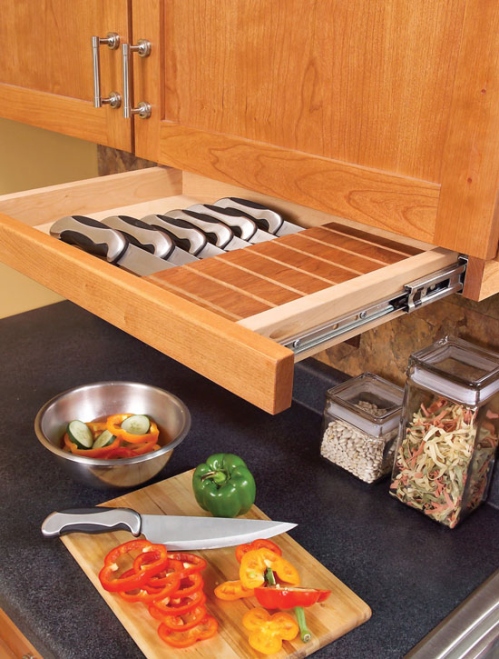
Under Cabinet Knife Drawer, courtesy of Buzzfeed.com and americanwoodworker.com
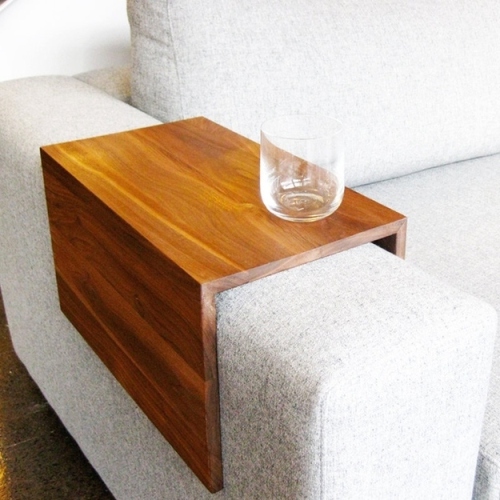
Couch Arm Wrap, via Buzfeed.com and Etsy.com
If you’re ready to create a beautiful home that is also tremendously practical and functional for your lifestyle, whether your style is contemporary or traditional, and you’re not into doing it yourself, please drop me a note to get started!
Posted in Designer Pick, Products | Tagged end table, kitchen design, practical home design, William Morris, wine storage | Leave a Comment »
If I had a nickel for every time I’ve heard someone complain about a contractor who hasn’t done the job right, or hasn’t scheduled enough time for the job, or walked off the job in the middle never to be heard from again, leaving a mess in his wake, or who has taken so long to get the job done that an important deadline has been missed, etc., I’d be a wealthy woman.
The cold, hard fact of the matter is that not only are there a lot of bad contractors our there, but the average contractor doesn’t give a rat’s patoot about you, Jane or Joe Homeowner.
Sure, some are better at business than others and do recognize the importance of taking good care of their customers no matter who they are, and there are in fact some really fabulous ones out there – but the reality is that every single one of them is going to go on to their next job when finished with yours, while you are probably only going refinish your floor or redo your bathroom or put on an addition once in your whole life, and chances are you’ll forget who they are anyways the next time you do decide to do something to your house.
You hear endless horror stories about contractors and remodeling, too, because the average homeowner simply doesn’t know what to look for or how to hire one and ensure the job gets done right, on time, and on budget. Most people simply have no clue about what they don’t know until they find themselves in the middle of a big, expensive mess.
Most people also go about a remodeling project backwards, by hiring a contractor first, and then letting the contractor essentially end up dictating how the job gets done, only giving him very vague instructions. If you do that, you will end up with problems, and not with what you want, because it is absolutely essential to have the design completely finished and fully spec-ed out in every tiny detail down to the door stops, cabinet hinges, and edge trim on the countertops before you go out to bid. If you don’t, you won’t even be able to fairly compare bids because each contractor will be making it all up in his own head as he goes along since you haven’t specified everything. Incomplete design will always lead to cost overruns and a job taking far longer than you expected even if you hire the best contractor in town.
It’s not really a personal failing if you find yourself in this kind of position; you just haven’t had any reason to know before, and we are simply not all experts in everything – nor should we be. This is simply not your area of specialization.
Interior designers, however, not only do specialize in this stuff, living, eating, sleeping, and breathing it for decades on end, but we also get the design finished down to the last detail before putting it out to bid so that you can compare bids fairly. We know every detail that has to be planned.
We also maintain solid working relationships with usually several top flight general contractors – and most importantly, those are ongoing relationships. This breeds loyalty as it does in any field in which collaboration and partnership are part of getting the job done successfully.
We do know how to assess who is good and who is not, and how to level the playing field in the world of obtaining bids. We have backups we can call in quickly if an insurmountable problem does arise with one contractor during a job, and that does happen sometimes, even with the best of them and the best-planned projects. We know which contractors are best for which types of job, and only refer ones who we know are definitely committed to excellence and customer satisfaction.
We are able to realize economies in working with a contractor that you can’t because of the working relationship one develops when doing multiple projects together, and because of having already-shared common professional ground and knowledge. When you work with someone regularly, and you share a professional knowledge base, you learn each others’ strengths and weaknesses, how they think, etc., and that ends up saving time, which saves you the client money – oftentimes a lot of money.
These ongoing working relationships also help us during the design process. We can get feedback from the contractor about ways to do things that might save money well before the design is finalized and the work started. The most successful projects that involve construction actually start off with the designer and contractor collaborating right from the beginning. It is always, always, always cheaper for you-the-client to change a design on paper before starting construction (or purchasing) than once things are underway.
But most importantly in some ways, and a big part of why these relationships matter to you the client, is that contractor knows that if he doesn’t get the job done right and take good care of the designer’s client, and absolutely get that work done in time for her to put her house back together for holiday visitors if that’s what is promised, the designer is simply not likely to call on him again for her next job.
And the designer will have a next job for him, while you simply probably won’t.
Which means, practically speaking, that he’ll take her call even if he might not take yours. He’ll be more likely pull guys off another job to finish yours if necessary where he might not without the designer being part of the equation. He’ll simply take better care of you in every way since he’s probably a better businessperson to start with than the one you might find on your own, but also because he definitely wants to keep that designer happy so she will bring him her next project.
A good designer and contractor combination will also be able to tell you up front if the job can be done in the time frame you have in mind or if you’re dreaming and need to come back into the land of reality – before you even tear your house apart and start, or break ground on a new one.
And a good designer will know to warn you about things a contractor might not – like how you need to plan on a certain level of cost and time overruns, and build them into your plans and budget.
These overruns do still happen even with the best design and best contractors, because there are many things that can crop up in the course of even the best-planned project that no one on earth could ever foresee, but you simply minimize the chances of them (and the extent), and certainly minimize the likelihood of the most predictable problems cropping up when you work with an experienced designer who already has established trade relationships.
=========
If you’re ready to get going on that remodel or new house that you’ve been thinking about for so long, and want to make creating your dream home or room as easy on yourself as possible, saving yourself both time, money, and aggravation with one stop shopping, freeing you up to take care of other more important things in your life even while your project progresses, please contact me by clicking on the “Contact” tab above. I look forward to working with you!
Posted in Uncategorized | 1 Comment »
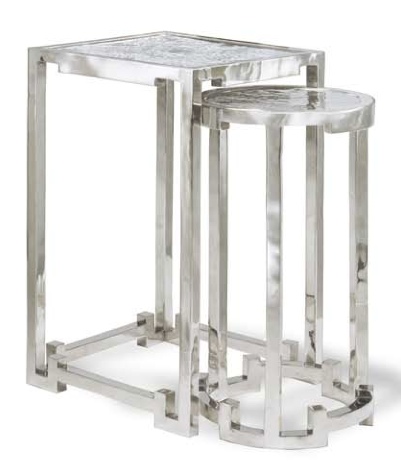
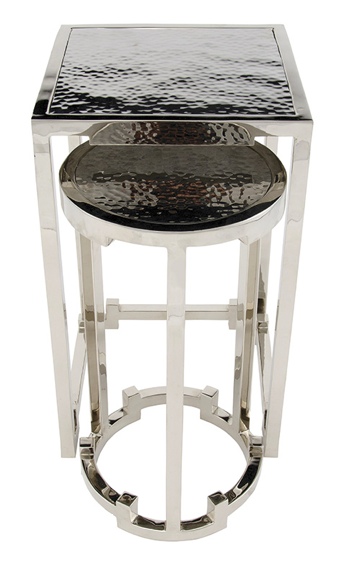
White bronze nesting tables
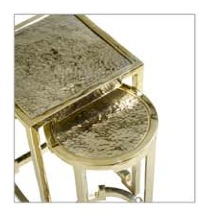
Every so often, a piece of furniture comes along that can only be described as a work of art, or jewelry for the home. These beautiful nesting tables are a prime example of this breed of goods – and vastly prettier in person than the images show. The gleam of the highly polished metal base contrasts with the sparkle of the hammered finish of the tabletops in these distinctly contemporary pieces, while the detailing of the bases recalls more traditional design – crenellated castles, anyone?
The weight lets you know you are truly dealing with a quality piece, as does the sheer perfection of the finish and attention to detail. The finishes are like silk.
This is a magnificent melding of form and function in a pair of petite tables that will be at home almost anywhere.
Made of bronze, these nesting tables are available in a variety of polished and patina finishes (11 in all), including the three shown here.
Size: 11.5″ square x 20″ high
Please contact me for pricing if interested in adding these jewels to your own home.
Posted in Designer Pick, Furniture | Tagged bronze, contemporary, custom, end table, Furniture, hammered, hammered bronze, occasional table, polished bronze | Leave a Comment »
This is a great report about a journalist in Chile who undertook living as a disabled person for two weeks. Even if you don’t understand a word of Spanish, the videos of his experiences will speak for themselves about the types of obstacles disabled people face every day in both their homes and in public. We are fortunate in the US that public spaces are generally much more accessible than in Chile, but the same cannot be said about our housing stock. As our population ages, more and more people will find themselves disabled to some extent and start to face these kinds of issues.
Contact me today if you’re ready to evaluate your own home for accessibility as you and your loved ones age or cope with disabling illness, and to make necessary changes to enable greater independence for longer.
Universal/accessible design just makes sense – for everyone.
Posted in Uncategorized | 1 Comment »
From time to time, I come across some extraordinary antique finds and showcase them here on my blog. This is one of the more unusual and important chandeliers I’ve seen, and is in flawless condition. Scroll down past the description for closeup views, which show the detailing and sparkle.
The famed Salviati company was instrumental in the revitalization of the Murano glass industry in the 19th century, starting with the development of a method of making mosaics with glass (tesserae), which subsequently found their way into some of the most important and well-known buildings in the world, including the dome of St. Peter’s in Rome, l’Opera in Paris, the Houses of Parliament in London. The company is also credited with the rediscovery and preservation of flameworking (lampwork), aventurine glass (also called goldstone), and opal glass.

One of a kind amber crystal chandelier designed by Giulio Salviati (1843-1898) and manufactured by the Salviati company in Murano Italy. This chandelier is the only one known in existence made by Giulio and it was part of the Salviati museum in Venice Italy until removed about 30-35 years ago by the gentleman the present owner acquired it from in Venice. The gentleman that acquired the piece from the museum lives right across the street (main canal) from where the Salviati museum used to be and had it installed above his dining table that oversees the Grand Canal. The piece has remained untouched since installed and is in mint condition with no pieces missing, and is fully functional. The chandelier is currently in a warehouse in Italy; please allow 6-8 weeks for delivery.
Price Upon request
Condition
Excellent original condition; no pieces are chipped, broken, or missing.
Measurements
83″ high x 67″ diameter at the widest point (height does not include the chain or rod)
Specifications
Number of items: 1
Materials/Technique: Amber Murano Glass and Crystal
Creator: Salviati


================
Item source and information believed to be reputable and accurate, but authenticity not guaranteed by Hoechstetter Interiors.
Posted in Designer Pick, Lighting, Products | Leave a Comment »

Few things are uglier – or more dangerous (especially to the elderly and disabled) – than extension cords running across the floor to reach distant, inconvenient outlets. In the ideal world, of course, we would install new local outlets, including in the floor, right near where they are needed, but this isn’t always possible for one reason or another, including budget and renting one’s home rather than owning it. Wouldn’t it be great to be able to find a cord that is completely flat, and would not bulge up and create a tripping hazard, even under a rug?
This brilliant design by Chen Ju Wei would solve this problem elegantly. Too bad it’s only a concept – at least for now. Let’s hope it actually gets into production soon. The geometric pattern of the wiring is even beautiful enough to leave exposed if out of the way enough. I could even envision making some deliberate design elements out of a few of them together.
Click on the image above for some additional photos and information.
Posted in Accessible Design/Universal Design/Aging in Place, Design Ideas, Products, Technology | 1 Comment »
I just realized that although I’ve written several posts about universal design, I’ve not yet actually posted the principles that underlie this concept – so here they are.
THE PRINCIPLES OF UNIVERSAL DESIGNVersion 2.0 – 4/1/97 Compiled by advocates of universal design, listed in alphabetical order: Major funding provided by: The National Institute on Disability and Rehabilitation Research, U.S. Department of Education Copyright 1997 NC State University, The Center for Universal Design UNIVERSAL DESIGN:The design of products and environments to be usable by all people, to the greatest extent possible, without the need for adaptation or specialized design. The authors, a working group of architects, product designers, engineers and environmental design researchers, collaborated to establish the following Principles of Universal Design to guide a wide range of design disciplines including environments, products, and communications. These seven principles may be applied to evaluate existing designs, guide the design process and educate both designers and consumers about the characteristics of more usable products and environments. The Principles of Universal Design are presented here, in the following format: name of the principle, intended to be a concise and easily remembered statement of the key concept embodied in the principle; definition of the principle, a brief description of the principle’s primary directive for design; and guidelines, a list of the key elements that should be present in a design which adheres to the principle. (Note: all guidelines may not be relevant to all designs.) PRINCIPLE ONE: Equitable Use
|
Posted in Accessible Design/Universal Design/Aging in Place | Tagged Universal Design | Leave a Comment »

House in Hawaii, The Wiseman Group and architect Ricardo Legoretta
photo – Matthew Millman
I was just reading an article in Fast Company about why generalizing is often better than specializing in the job market, despite the push we’ve seen for decades to specialize, and it got me thinking of one of my pet peeves in the interior design world.
Today, most business consultants who work with interior designers are advising us to specialize for marketing reasons, often in a particular style or look, or targeting a particular demographic, which I think is a huge mistake. Clients also often look for designers who do the particular style they want to the exclusion of everything else, thereby likely ruling out a tremendous number of other highly competent designers who might actually do an even better job for them.
Oftentimes designers who only work in one style are basically repeating what they themselves prefer, which is fine if that’s what you really want, but if you want a really creative, and truly customized design, you want someone who has the ability to bring as broad a set of resources and skills to the table as possible – and the interest in doing so. It takes a little more work to keep up on a wider range of resources, to be sure, and not all designers really want to be bothered.

Apartment on Nob Hill, The Wiseman Group
photo – Tim Street-Porter
Speaking from experience as someone who has worked for and learned a great deal from a very gifted designer who nevertheless tends to stick to a similar aesthetic for all projects, it can also get really boring to a creative mind that gets fired up by a range of options and the process of really digging in and solving the specific problems each individual client has in a unique way, not applying the same solution to them all. Working in aesthetics other than those towards which one is personally inclined is a key way to keep the creative fires stoked, in what is fundamentally a creative discipline, and to keep that saw sharp.
The thing is, the fundamentals of the interior design, and the design process itself, are largely the same regardless of style, and a good designer who wants to create truly personalized solutions will deliberately cultivate the ability to work comfortably in a wide range of aesthetics.

The Wiseman Group
photo – Matthew Millman
What really matters most is the ability to truly listen to the client, and then to translate the client’s desires into tangible reality, and that entails a skill set that is completely independent of the style or color scheme selected. Scale is scale, balance is balance, etc., whether you are dealing with a modern building or a traditional one, and if someone is really good with color, they should be able to produce a wonderful color scheme in any hue in the rainbow.
Anyone can learn to repeat the same basic thing over and over again, but a big part of the point of hiring an interior designer is to have a customized solution that is unique to you and your own particular needs and style, and of course the architectural realities of your own home or office.
The reality is that not every designer can actually do it – or wants to be bothered.
Seeing projects that all look similar in someone’s portfolio raises the question about how versatile that designer really is. When you see a range of project styles that are all well done, you know you’re dealing with someone who has the ability to really customize as needed, and likely has a wider range of resources to bring to bear on the project as well. It takes more work to keep up on that range, but that also means the designer is clearly exposing herself to a wide range of options on a regular and ongoing basis – which can only mean good things for clients.
One of the world’s greatest designers, the Paul Vincent Wiseman of The Wiseman Group, who has long been one of my most revered design heroes, regularly demonstrates his ability to work brilliantly in virtually any style, as the contrasting photos above of his work attest. The first two projects shown, both frequently published and among my favorites of his work, could not be more different – the first, an apartment in an historic landmark building on top of San Francisco’s Nob Hill; the second, a vacation home in Hawaii built by one of the foremost modernist architects of our time. The third, equally distinct from the first two, is an estate in the Napa Valley with a 20th century design aesthetic with midcentury touches in a house built in a somewhat Spanish colonial style.
This is really what it means to be a great designer, in my opinion. You know just by looking at the range of his projects that Wiseman has both listened to and actually heard what his clients have said they wanted – and then delivered. Many of his clients have done multiple projects with him that span a wide range of styles, and he has to be able to handle that range, or frankly, he’d lose those clients to someone else when they want a different aesthetic in a new home. You know without asking that he could do anything asked of him, even if he hasn’t shown an example of that style or project type in his portfolio. Whether you like these particular examples or not, and regardless of your preference for these color schemes or others, these projects share the qualities of being perfectly scaled and designed for their respective spaces and environments, and every detail contributes harmoniously to the whole.
When you get into things like green design, aging-in-place/accessible/universal design, commercial design, or design for special functions like doctors’ offices or jails, then you do indeed get into a greater need for specialization and often additional training beyond that which is usually taught in design school. When dealing with nonresidential environments, building codes tend to play a larger role than they do in private homes, and the more specialized the function of the space, the more specialized the code and other technical issues.
Aging-in-place, etc. is becoming the big buzz word these days, and there is clearly growing demand, but I’ve encountered very few designers who have actually got the necessary training, or who otherwise show they’ve learned what they actually need to know to work with this specialized and growing market effectively, dealing with both the architectural requirements down to the selection of fabrics, colors, and furniture styles that are best for this market or subsets of it. With a few exceptions, most I’ve seen only understand part of the requirements. Strangely, most people who are Certified Aging in Place Specialists (a designation I hold, as one of only about four such certified interior designers in Northern CA) aren’t even designers, and while they could certain tell you where to put grab bars and how to build a ramp, and maybe do the work to install them, many couldn’t design their way out of a paper bag and integrate accessibility features into an overall beautiful aesthetic that doesn’t scream “institution” or “add-on” at you because they are simply not trained as designers.
For the vast majority of interior designers, however, and certainly within residential design or commercial design as broad overall categories, the ability to generalize and work in a wider range of styles is truly an asset, and the mark of a really proficient creative person – and one who is truly more interested in giving clients what they want than imposing a particular style upon them. Whether your project is a large estate or a single small room, wouldn’t you really rather know that this is your designer’s honest focus?
It is, of course, essential that your designer fully understand the code issues that are involved in whatever type of project you have, but at the end of the day, the way most people interface with their space demands the ability to produce the creative vision, and to make the technical matters disappear and to function seamlessly behind the scenes, supporting the overall desired function and aesthetic of the space.
If the designer is properly conversant with residential codes, she will be able to deal with them whether it’s a modern building or an older one, and the same for the commercial designer int he world of office buildings. Some designers know both, but not all. Don’t assume; ask what types of projects they have done and/or are trained to do. Just because there isn’t an example in her portfolio of exactly the type of space your project entails doesn’t mean she isn’t trained to handle it and can’t still do an excellent job. (Beware if the designer doesn’t know that there are huge code differences, however! And that they may need to use different contractors for different job types.)
It takes staying on top of continuing education whether it is required for local certification or not to maintain one’s knowledge of the technical side of things (and doing that is vastly more important in the end than any alphabet soup of professional designations a designer may or may not choose to obtain – and almost all of them are entirely optional and not required in any way by the vast majority of states and countries), but it is critically important not to forget the creative side of things, either, and to select a designer who shows she has the ability to do what a range of work, and to think outside the box.
Posted in Accessible Design/Universal Design/Aging in Place, Color, Design Theory, Green Design, Working With a Designer | Tagged balance, bulding codes, Color, commercial design, custom design, design process, generalist, harmony, high end interiors, historic landmark, hue, Interior Design, modernist, Paul Vincent Wiseman, personalized design, preservation, residential design, Ricardo Legoretta, scale, specialization, traditional, unique design | Leave a Comment »

If you rent your home or apartment, chances are it’s equipped with vertical blinds, a design disaster if ever there was one. And chances are you hate them, just like virtually everyone else on the planet, certainly like all people with any taste. They are universally cheap, cold, ugly, noisy, and don’t go with anything. And did I mention ugly?
Like most renters, however, you probably don’t want to go to the expense and hassle of buying and installing new window treatments, dealing with the repairs when you move out, or risking losing your security deposit, especially if you don’t plan to live there for a long, long time. You are, in other words, pretty well stuck with these things.
So what’s the solution? Check out this absolutely ingenious idea from Mr. Kate. There’s a video on her site that shows you how it’s done. This would work with a very wide range of lightweight fabrics or sheers, and be a piece of cake to change whenever you might want to. It won’t get rid of the basic object, of course, but will at least make them more attractive, and help integrate them into whatever your decor is.
Posted in Window Treatments | Tagged rent, vertical blind, window treatment | Leave a Comment »
Home Instead Senior Care, an absolutely wonderful company whose Southwest Pittsburgh and Washington County branch took terrific care of my father during his last days, has put out a very good video about funding options for completing aging-in-place home modifications. It covers everything I mentioned in my prior post, plus a number of additional options to look into.
Posted in Accessible Design/Universal Design/Aging in Place | 1 Comment »
Do you need modifications to your home because of injury, illness, or just plain aging and a desire to stay in your home, eliminating obstacles that may exist to doing so, but don’t think you can afford them?
First of all, many modifications may cost far less than you might expect, because they often don’t need to be as extensive or labor-intensive as you might imagine, and can actually be quite simple.
For example, sometimes all that is needed to ensure wheelchair accessibility may be to remove the moldings from around your doors and finish off the opening without them, and maybe either add new doors that fit the enlarged opening better, or in some cases, dispense with them altogether. This alone can add a couple of inches of width to the doorway that can make all the difference, without getting into major remodeling.
And in places like the bathroom, as long as you can get the chair in there (which the door width may be the only obstacle to), depending on your particular situation, all you might need to be able to shower or bathe on your own might be a transfer bench and grab bars – although of course, you could certainly also opt do a full remodel with a wheel-in shower, step-in tub, and many other helpful aids that can be created in a way that no one else needs to know their purpose if you prefer.
Your best bet to determine what will serve your needs the best in a way that will fit your budget will be to consult a professional with the CAPS (Certified Aging in Place Specialist) designation to find out what’s necessary and possible, and to get a realistic idea of what it will cost. You can search for an appropriate professional in your area via the National Association of Home Builders CAPS Directory. CAPS specialists are specifically trained to manage the changes needed in the residential built environment in order for people to age comfortably and safely in their own homes – and that same training applies to both accessible and universal design as well.
If you have an occupational or physical therapist, you might want to involve them in the process as well, even if they have not already done a home visit, so that your needs and the specific obstacles in your home are most appropriately identified from a medical/functional perspective, leaving the design professionals to create a solution that best implements those requirements in the most aesthetically-pleasing way possible within your budget constraints.
Accessible design is created for people with specific, known needs, and universal design is a more general concept that allows people of a range of ages and abilities to function well together in the same space, anticipating potential needs along with addressing actual existing ones. They overlap with each other, and both overlap with aging-in-place.
If aesthetics is important to you (and it should be, because that greatly impacts your enjoyment of your home), start with an interior designer or architect who is CAPS-certified, and hire a contractor who also holds the designation for the optimal combination of design and construction knowledge. No one wants to – or needs to – live in a home that looks institutional in order for it to function well for physical needs.
Some contractors, although far from all, may have some training in interior and/or architectural design, so unless you know you only need or want the most basic of changes like functional grab bars and/or stair glides, the best outcomes in any renovation or new construction project will usually come from hiring a team that works together to address not just the technical issues but also the aesthetic ones, and not just the physical house issues, but also furnishings, color, lighting, etc., all of which can also be modified as necessary to address various types of disabilities, including normal age-related vision loss.
Most designers and architects will meet with you initially at no charge to explain their services, find out generally what your needs, budget, and preferences are, and to make a proposal, so don’t be afraid to call one even if you think you can’t afford our services. If it does turn out to be more than you want to spend to hire one to do the whole project, many, myself included, will also work on an hourly consultation basis to give you advice, review contractors’ plans before the proposed modifications are built, etc.
Finally, when it does come time to do whatever work needs to be done, if you find that you really can’t afford them on your own, you may be able to locate some surprising sources of help in funding the modifications.
While it is beyond the scope of this blog – and indeed the scope of any design or construction trade professional – to offer specific advice about financial assistance, or its appropriateness for any specific situation or type of situation, I would like to share some resources that you can investigate on your own. Please do consult with your own financial, tax, and legal advisors to determine the impacts and pros and cons of any financial options you may be considering. In some situations, there might even be tax breaks associated with such modifications that might increase their affordability, but again, please do consult your own advisors for details.
One place to start, certainly, is asking your bank about a loan, and another is to ask your accountant and/or attorney about any sources they may know of. Likewise, your church, synagogue, or other house of worship might be able to suggest or offer assistance through either that particular facility or through the religion’s local or national agencies and charities. Fraternal organizations might have options as well, if you belong to one.
The Our Parents blog (which is a wonderful general resource for information about aging in general, and caring for older adults) also has a nice article on where to turn to seek financial aid with an assortment of links that will help you research options in your area, or that apply to your particular circumstances.
Don’t be put off by the name of the blog or references to aging and seniors if you are not of that “certain age”, as many of these agencies might also have programs that could benefit younger people as well if they have significant disabilities, and the blog certainly has information that would be beneficial to people with other disabling conditions. They also have a nice article with other links about the possible pitfalls of reverse mortgages, which many people think of, and which may or may not be appropriate for a given situation.
Posted in Accessible Design, Accessible Design/Universal Design/Aging in Place, Bathrooms, Construction, Kitchens & Baths, Remodelling, Safety & Welfare, Universal Design | Tagged Accessible Design, aging in place, CAPS, Certified Aging in Place Specialist, contractor, financing, home modifications, interior designer, Universal Design | 1 Comment »
Interiors & Sources just introduced a new feature blog written by “Debbie Designer” that is dedicated to calling out bad design in the world. It’s a great idea, on the whole, but I’ve got some issues with how it is presented. “Debbie” leads off with a scathing commentary about Kelly Wearstler.
While I am really not a fan of Kelly Wearstler’s, and quite agree that there’s a lot of bad design out in the world in general, much of which is getting a lot of press due to better marketing than many of the truly best designers do, I can’t agree that there’s anything inherently wrong with promoting one’s own self, products, and business, no matter how dreadful others may think it is. It would be nice on one level if we could all live in a society where everything was tastefully designed, but a) we live in a free country and everyone has the right to their own preferences – and professions, b) who would get to decide what is good and what isn’t?, and c) how boring life would be if everything were always perfect, and there was no room for differences in taste!
Frankly, I’m surprised that magazine of I&S’s caliber is putting up a feature with this nasty an edge. Yes, we all snark about others at times, but whatever happened to common courtesy? And how is an attack of this nature useful to anyone?
The reason there is bad design is because not everyone trying to do it is equally talented. And not everyone hiring bad designers knows the difference. It really is all about marketing, in the end – and the fact that many people just don’t have good taste, and/or have never been exposed to anything better, or learned the differences. There’s no great mystery or sociological higher reason why we “allow” bad design to exist – and allow bad designers to stay in business. The reality is that neither of these is anyone else’s call, other than the parties directly involved in the transactions and projects.
If you want to talk about bad design, I’d suggest that it would be far more productive, useful, mature, and *professional* to do it as a proper critique of exactly what does and does not work about a particular object, space, or body of work. It would not only provide more useful content to designers, particularly those at the start of their careers, but it would frankly look better to the public who stumble in there as well. Their perception of designers as nasty, stuck up, and unreasonably demanding is bad enough, and is already fed by many sources. Let’s not make it worse in professional publications like this.
There’s plenty of room for snark in that kind of presentation as well, but I’d like to see things kept basically respectful – and educational, at least the post put up by the magazine. Please see James Swan’s hilarious “100 Things I Hate About Your House” on Facebook for some superb examples in which both humor, snark, and real education and professional discussion merge beautifully. When he snarks, it actually is funny. This post, unfortunately was not.
It’s also one thing for commenters to snark in their responses, but quite another for someone representing a major professional magazine to do so in his or her original posts.
I also find it quite disturbing that this new feature is written by someone who isn’t putting her own name on the line, who is unwilling to own her own words publicly. It’s obvious why – and in my opinion, it’s extremely cowardly and unprofessional. For shame, I&S. You’ve just gone way downhill in my estimation.
Posted in Inspirational, marketing, Professional Development | Leave a Comment »

I’ve recently been thinking that I need to really get started on cleaning out the clutter in my house – and I don’t just need to, but I actually want to. I’ve got a beautiful home, but far too much stuff filling it up, and it’s really started to weigh on me for a lot of reasons. For one thing, the clutter keeps me from enjoying my home as much as I’d like to. For another, I’d like to do some travelling and possibly rent the place out for an extended period of time so I can wander a bit, and it’s just not possible without a real clean out. But most importantly, an excess of stuff is literally weighing me down in many ways. My life has changed dramatically in the past couple of years, and I’m feeling in need of something resembling a fresh start to clean out the cobwebs of the many negative things that have happened, and to make room for something new to come into my life in this next phase of it. If you want to know the condition of your mind, look in your closets and around your house.
I wonder what I can live without of all of this. When I look at it, there are reasons for keeping all of it, and I start thinking it’s going to be a herculean task, and that I’ll feel deprived if I give up all this stuff. But when I had a fire in the house several years ago and was left unable to access or use the majority of my belongings (thankfully they just needed deep cleaning), and had to live without 99% of this for nearly a year, I can honestly say I didn’t miss the vast majority of it – and didn’t even remember I had a lot of it.
These thoughts were literally keeping me up last night, so I got up early, only to find the following article in my email, sent by the wonderful kitchen and bath showroom DJ Mehler. It seems this is a common theme these days.
What do you think you could never live without, and what are you sure you want to jettison?
Take a look at the following article reprinted from Family Circle.com for a list of 18 things you can get rid of today, and some great ideas on how to let the things you don’t need go.
______________________________________________________________________________________________________________________

Just Say No to Too Much Stuff
Stuff. For many of us it’s worse than any four-letter word. That’s because “stuff” can weigh you down and hold you back, says Gail Blanke, author of Throw Out Fifty Things. And, in the end, much of what we accumulate in life isn’t all that important. As Marilyn Bohn, author of Go Organize!, points out, “No one ever says, ‘I wish I’d kept more stuff.'”
Still, getting rid of our discards can be a challenge. Carla Eskelsen, a mom in Farmington, Utah, admits she had trouble letting go of stuff until she figured out how to manage her “pioneer DNA.” Once she figured out that donating and recycling “honored” her pioneer ancestors, she found it much easier. “It’s about sharing and blessing others instead of keeping it all for yourself,” she says. Here’s how you can share and bless others with all of your stuff-and end up with a cleaner, more peaceful home while you’re at it.
1. Kitchen Utensils
Is your utensil drawer so full you can barely open and close it? You’re not alone. When Robin Austin started cleaning her kitchen in preparation for a move, she found she had plenty of duplicate utensils, the result of a new marriage that combined households and six kids. Many of us also buy new utensils but forget to get rid of the old.
Here’s a smart way to figure out what you’re really using, from Motherboard Mom Jeanne Smith, Overland Park, Kansas: Toss everything-all the spatulas, rubber scrapers, pie servers, and so on-into a box. As you use a utensil from the box, put it back in the drawer. After a month, check what’s left in the box. Keep those once-a-year items that remain in the box, like a turkey baster or candy thermometer. But donate the rest.
2. Coffee Mugs
Another item many moms find hogging valuable cupboard space: coffee mugs. “We had over 20 coffee mugs,” says Kansas mom Dawn Schnake. She and her husband each chose four mugs to keep and donated the rest to a church rummage sale.
“Even if you received something as a gift, it’s okay to let it go,” says organizer Marilyn Bohn. “You only need to keep what works for you.”
3. Plastic Containers
Mary Pankiewicz, owner of Clutter-Free and Organized in east Tennessee, suspects that plastic containers have a secret life (probably hanging out with those AWOL socks and hangers). How else can you explain why so many lids and bottoms don’t match up? She suggests holding a “lid party” to match up those errant tops and bottoms. Pankiewicz recently took her own advice. “I had 25 lids with no bottoms and six bottoms with no lids,” she says. After swapping with friends, she recycled the rest of the mismatched items.
4. Little-Used Kitchen Stuff
When was the last time you used that Bundt pan? If it was months ago, maybe you should give it to a friend. That’s what Suzy Ayres and a pal did when they performed a joint kitchen cleanup. They took everything out of their cabinets and only put back what they used regularly. “The things that we left out that didn’t get used much, we had to choose. If we put one thing back in the cabinet, we had to pick one thing to donate,” Ayres says. The two also traded items: “She had lots of muffin pans and I didn’t.”
An added bonus to the plan: They now know what’s in each other’s kitchens, and don’t need to buy some of those rarely used items, like a Bundt pan. “We’ve been trading the same ice bucket back and forth for years,” Ayres says. “I can’t even remember who it belongs to!”
6. Food
Cupboards full of food you’re not sure you’re going to use? Some solutions:
·Check the expiration dates on everything in your pantry, fridge, or freezer. If it’s about to expire, put it on the menu for that week, says professional organizer Bohn.
·Motherboard Mom Dawn Schnake gives her sons what they call “muffin pan snacks” to get rid of those almost-empty bags of cereal, crackers, and chips. She fills each of the 12 muffin cups with a different snack and throws in some veggies, cut-up fruit, and cheese cubes. “The boys think they’ve sat down to a feast,” she says-and she gets her pantry cleaned out.
·If you know you’re never going to use an item-and it’s still good-give it to your local food pantry.
·Have an “Eat Out of the Pantry or Freezer” week, says Marla Cilley, flylady.net. You’ll be surprised at how creative you can get with your menu planning when you’re only using the ingredients on hand. She also suggests this as a way to inspire creativity and frugality: “When you throw away food, imagine you’re throwing dollar bills in the trash can!”
5. Vases
Got vases from the last three Valentine’s Day bouquets? Take them back to the florist, says Marla Cilley, who lives in Transylvania County, North Carolina, and runs the flylady.net, an Internet site devoted to housecleaning and organization.
“It takes away your creativity and takes over your mind,” Cilley says.
7. Spices
They don’t mold and don’t appear to go bad, but spices don’t last forever, not even cayenne pepper. (Cinnamon’s an exception to the rule.) “Dried is one thing, tasteless is another,” says organizer Blanke. Give your spices the smell and taste test and if they’ve gone bland and boring, dump them. To find out how old your McCormick or Schilling brand spices are, go to http://mccormick.com/Spices101/HowOldSpices.aspx. And when you buy new spices, mark down the date on the package with a Sharpie.
8. Receipts
Computers were supposed to usher in a paperless society, but it hasn’t happened quite yet. “Most of us are still drowning in paper,” says organizer Pankiewicz. She suggests an annual cleanup. Check with your accountant about how long to keep important papers like tax returns but, in general, materials that support tax returns (receipts and so on) can be tossed after seven years.
9. Magazines
Do you have a stack of magazines by your bed that you haven’t read? If two months have passed and they’re still sitting there, consider donating them to a retirement home, hospital, doctor’s office, or school. Many take magazines for art projects (if not for reading material). If, like former magazine editor Cherie Spino, a mom of four in Toledo, Ohio, you “can’t throw a magazine away without reading it,” do the flip-and-rip. Spino rips out recipes or articles she wants to keep and throws the rest into the recycling bin. She’s putting the recipes in a binder.
Organizer Bohn suggests tearing out articles and putting them in a folder you can grab when you know you’ll be sitting and waiting (think doctor’s office). Or, if you’re a tech-lover, you can get many popular magazines as an app for your phone or electronic reader.
Posted in Organizing | Tagged clutter, downsizing, Organizing, simplifying | 3 Comments »
My friend Nicolette writes quite a bit about aging in place, disabilities, and interior design, and her posts usually get me thinking quite a lot, especially her one on strategies to deal with loss and aging.
It’s a topic that’s near and dear to my own heart as well, along with the related issues of universal and accessible design, all of which are really tied together and inseparable. There’s a lot of overlap among the concepts of aging-in-place and universal design in particular, but also with accessible design. These are issues that we all eventually face one way or another; it just happens to be the turn of my generation to learn how to age well.
Disability, of course, can and does strike at any age. In my own family, my brother has been dealing with an illness and injuries that will leave him disabled and mobility-impaired for life, and he’s only 50. At the same time, both my father and his partner are ill, as is my aunt. My now-former partner is facing serious medical problems in his own family as well, so we were both stressed out by these issues. I myself cope with several disabilities, and have found my mobility impaired by injuries, and even my ability to dress myself and take care of my own hair is greatly diminished at times. Age is taking its toll on us all in various ways – and these kinds of stressors impact all relationships.
Having the tragedy of my brother’s situation occur so suddenly, on top of trying to look after my father at a particularly difficult period in his own life, really brought these issues home for me in ways that even a decade as a paramedic, a stint selling life and disability insurance, and even my own travails never did, and is the reason why I finally completed the coursework I needed to obtain my credentials as a Certified Aging in Place Specialist (CAPS designation) a couple of years ago. I will discuss what CAPS is more extensively in another post.
There are many, many things that can be done in a home or office to assist people in dealing with the physical challenges of disabilities and aging. Hundreds of websites and resources exist; there’s no shortage of information out there. I’ll be writing more about these topics as time goes by, but for the moment, let’s just take this as a given.
In reality, the physical changes required for designing a home that supports aging in place or dealing with a wide range of disabilities well are the easy part. The technology exists, and with enough ingenuity (and sometimes cash, admittedly), anything is possible.
Even if a major remodel is not possible, there are usually at least small modifications that can help improve the functionality of the physical space immensely, especially for people who do not require major changes for wheelchair access. Not long ago, for example, I consulted with a lovely, vibrant woman in her 70s who is feeling the losses associated with arthritis on how she can modify her draperies so that they are easier to draw, and don’t hurt her shoulders. She’s on an extremely tight budget, so a lot of the products I normally work with are out of the question, but even in a brief discussion, I identified at least four different ways she could modify things with cheap, readily available materials just from the hardware store that would still preserve the open, airy, minimalist kind of look she prefers, and we are looking now at more specific products. She’s got cafe curtains hung with a rod pocket, which take some pushing even for able-bodied people to move, so just changing to a style with rings or grommets will allow them to glide effortlessly on the rod. She won’t have to reach up any more, either.
This small change alone will allow her to deal with something she has to handle daily with much less wear and tear on her shoulders, and bring a measure of ease to her life that she never even thought she could have, especially without spending a fortune. When you are in pain, and your joints are deteriorating like this, even eliminating one or two aggravating movements a day can make a very big difference in your comfort level – and your ability to enjoy your home. An accumulation of several or many such minor modifications can really add up over time.
Willingness and ability to think outside the box to adapt common materials to the task at hand are critical skills for designers, especially those of us who work with people with physical limitations or tight budgets. A good interior designer is invaluable to this process – and to making changes that integrate well, still look beautiful, employ the same kind of quality materials of any other good design – and which don’t scream “disability” or “old people”.
People often don’t even know there’s anything that can be done to help some of the difficulties they have, so a sensitive, perceptive, and creative designer who knows how to ask the right questions and to observe well can open a lot of doors, and create solutions for problems that a client never even knew were possible and thus may have never even thought to ask about or request.
I was very gratified to see the face of the lady I consulted with just open up with amazement and hope upon hearing the range of possibilities I was able to come up with; that’s the kind of response that drives me to do what I do. And I didn’t even realize just how automatic it is for me to think this way until she herself commented on how natural it is to me. She’s been incredibly frustrated because she hasn’t been able to find a new kind of wand that would be more functional – but that isn’t where the best solution actually lies.
But what most stops people, especially from doing anything about modifying their environments before they absolutely have to, and which causes them the most difficulty, is undoubtedly the emotional component – the need to acknowledge the fact of these changes, whether existing or pending. And often, we put off making the changes we know we may need while it’s still easy, and end up in a crisis that forces decision-making at the worst possible times.
We don’t like to face the thought of our own mortality, even when the evidence continues to mount. It’s a natural human reaction. We don’t want to let go of who we once were, the things we could do before, the hopes and dreams for the future. We don’t want to acknowledge that there is indeed a sunset period to life, and that we must all face it someday. We don’t like the idea of letting go of cherished possessions, or moving to a place that doesn’t hold the same memories of our present homes. We are afraid of what life will look like as we lose abilities, and as our friends also decline – and inevitably die. We hang onto our stuff for dear life, as if it’s the only anchor that will remind us of who we are and where we have been, as if we can keep time from advancing if we just don’t change a thing in our environments. We hold onto our old ways of doing things, and outdated, nonfunctional homes, often because of fear that somehow admitting to what’s inevitable will somehow make it come to pass more quickly and take something away from us now.
Some people are lucky enough that they will be able to stay in their own homes for the rest of their lives, and without modifications. For many of the rest of us, though, changes are inevitable, even if only because of declining incomes, or desire to just not have so much house to take care of any more. But the first – and most ongoing – hurdle we have to face is the one in our own heads.
Also, as we Baby Boomers age, the stresses our sheer numbers will put on the health care and elder care systems will overwhelm both, and more and more long term care will have to occur in our own homes. We must plan in advance for these changes, if we are able to. Most people want to remain at home as long as it’s humanly possible anyways, but we are going to face the situation where there is likely not going to be any other choice for many of us who might actually prefer or need to utilize services such as assisted living at some point, just because of overload on the system.
Fortunately, there is a lot of help out there even for mental adjustments we may need to make. Good therapists and support groups can be invaluable, and there is no shortage of reading material. A good interior designer will also be exquisitely sensitive to needs, and can open doors that you haven’t even thought about. There are many strategies for combing through your possessions in an orderly way and deciding what to keep and what needs to find a new home, so that we can “right-size” our lives.
Identifying the things you own that have the most meaning to you and taking them with you if you move even if you have to jettison the rest can go a long, long ways towards helping ease the pain of change, for example. Do you really need that entire collection of decorative boxes you’ve amassed over the years? Or are there a few choice pieces that hold the most meaning for you, and which would help remind you of all of the rest? Can you photograph them and save them that way instead of taking them with you physically? Do you ever even look at all of those old photo albums that are piled up in the den, or would just keeping a few photos, framing them beautifully and using them in your new home still give you as much joy?
Start editing your possessions by asking yourself what single item you would take with you if you were told you had to evacuate your home immediately, and were only allowed to take one thing (ignoring whether it’s actually portable or not). Then repeat this exercise with the thought that you could only take one more item, and so on.
Looking at the move or remodel as an exciting opportunity to start afresh can help immensely as well. Even if the reason for remodeling your bathroom and kitchen is because you are now in a wheelchair, or expect you will be in a couple of years, if you can look at this as a positive thing that will help you continue to live as normally as possible, and increase convenience for you and everyone else living in or entering your home, you will be far, far ahead of the game. There’s no reason a fully accessible home has to look like a hospital, and it can easily be a showcase, just as any other home.
Consider, for example, that you get to have a brand new bathroom – focus on the wonderful new things you will have, and how simple things like taking a shower will now be much easier than they have been – or possible in the first place. Order beautiful cabinetry, tile, lighting, and fixtures. There are even beautiful grab bars made now that will coordinate perfectly with the rest of your bathroom fittings. The additional space you will need will make the room more functional for everyone. Make the space a sanctuary, not something institutional in character, and it will become a destination for the whole family – a source of joy, peace, and comfort, instead of a reminder of loss or impending loss.
Because loss and change are inevitable parts of life. They affect us in so many ways. The outlook we bring to the process, and to any home or office changes we must make, can make all the difference in the world – and that much, at least, need not cost a cent.
=========================
If you would like an evaluation of your existing space to see if it is suitable for aging in place or accommodating a known or expected disability, or for assistance in designing a new home that will fully support your living your life to the fullest regardless of your own current or future physical needs (or those of your family members), and you want to ensure a beautiful as well as highly functional result, please contact me.
Posted in Accessible Design/Universal Design/Aging in Place, Kitchens & Baths, Organizing, Personal | Tagged Accessible Design, aging, aging in place, arthritis, CAPS, Certified Aging in Place Specialist, change, disability, downsizing, elder care, family, health care, home modifications, long term care, mobility limitation, modifications, Organizing, remodeling, right sizing, Universal Design, wheelchair | Leave a Comment »
11 kitchen and bath design trends for 2011
Dark natural finishes, induction cooktops, satin nickel faucets, and LED lighting are among the top design trends for kitchens and bathrooms for 2011.
By NKBA Staff
February 13, 2011
More than 100 designers who are members of the National Kitchen & Bath Association (NKBA), and have designed kitchens or bathrooms during the last three months of 2010, participated in an NKBA survey to reveal design trends in the marketplace for 2011. The results of this survey suggest there will be some changes in the direction that kitchen and bath styles will take this year. Below are 7 kitchen trends and 4 bathroom trends that are poised to take hold in 2011. These are overall trends across the United States and Canada; they won’t necessarily appear in all geographic areas.
Kitchens
1) Shake It Up
The Shaker style began a rise in popularity in 2009 and gained momentum in 2010. By the end of the year, Shaker has supplanted Contemporary as the second most popular style used by NKBA member designers. While Traditional remains the most popular style, having been used by 76% of designers surveyed over that last three months of 2010, that’s a slight drop from the previous year. Meanwhile, the percent of respondents who designed contemporary kitchens fell to 48%, while Shaker rose to 55%. Cottage was the only other style to garner at least 20% of the market, as it registered at 21%.
2) Dark Finishes
Dark natural finishes overtook medium natural, glazed, and white painted finishes to become the most specified type of finish toward the end of 2010. While medium natural fell from being used by 53% to 48% of designers, glazed from 53% to 42%, and white painted from 49% to 47%, dark natural finishes rose from 42 to 51%. Light natural and colored painted finishes remained fairly common, as each rose slightly from the previous year: 24% to 25% for light natural and 24% to 29% for colored paints. Distressed finishes dropped significantly from a year ago, when they were used by 16% of designers, to just 5%.
3) A Place for Wine
While the incorporation of wine refrigerators seems to be on the decline (see Bonjour Réfrigérateur below), unchilled wine storage is growing in popularity. While only 39% of surveyed designers incorporated wine storage areas into their kitchens at the end of 2009, just over half—51%—did so as 2010 came to a close. While other types of cabinetry options remain more common, most are on the decline, including tall pantries (89% to 84%), lazy Susans (90% to 78%), and pull-out racks (81% to 71%). Appliance garages also seem to be falling out of favor, as their use declined from 36% at the end of 2009 to 29% a year later.
4) Bonjour Réfrigérateur
The French door refrigerator has strengthened its position as the type specified most often by NKBA member designers. While freezer-top refrigerators were only specified by 8% of designers as 2010 drew to a close—down from 10% a year earlier, freezer-bottom models fell very slightly from 60% to 59% and side-by-side units actually rose slightly from 46% to 49%. Meanwhile, French door refrigerators jumped from 67% to 78%. Among smaller units, refrigerator or freezer drawers remained flat at 31%, while undercounter wine refrigerators fell sharply from 50% to 36%, an interesting change given the increasing use of unchilled wine storage.
5) Inducting a New Cooktop
Induction cooktops haven’t overtaken gas and electric models, but they’re closing the gap. As we entered 2010, gas cooktops had been recently specified by 76% of NKBA designers, compared to 38% for electric and 26% for induction. However, while the incorporation of gas cooktops has fallen to 70%, electric cooktops has risen slightly to 41%, while induction cooktops are up to 34%. Meanwhile, single wall ovens are down from 46% to 42%, although double wall ovens are up from 68% to 74%. In addition, warming drawers are down from 49% to 42%, and ranges are down sharply from 81% to 68%.
6) LED Lighting
Incandescent lighting continues its journey to obsolescence. While 50% of NKBA member designers incorporated incandescent bulbs into their designs at the end of 2009, only 35% have done so a year later. Instead, designers are clearly opting for more energy-efficient lighting options. While the use of halogen lighting is down from 46% to 40% over the past year, LED (light-emitting diode) lighting has increased from 47% to 54%. Designers aren’t turning to CFLs (compact fluorescent lights) as a solution, though, most likely due to the poor quality of light they produce; their use by designers remained flat at 35%.
7) Trashy Designs
A greater emphasis is being made to address trash considerations in the kitchen. Some 89% of kitchens designed by NKBA members in the final quarter of 2010 include a trash or recycling pull-outs. In addition, garbage disposals were incorporated by 86% of designers, up from 75% the previous year. Trash compactors have also become more common. Entering 2010, they were recently used in designs by 11% of designers, but a year later, that figure had climbed to 18%. These changes may be due to an increase in sustainability awareness, but they certainly indicate an increase in concern toward trash generated in the kitchen.
Bathrooms
1) Quartz Countertops
Quartz continues to take away market share from granite in the market for bathroom vanity tops. A year ago, 85% of NKBA bathroom designers incorporated granite into a recent design, compared to just 48% for quartz, but now, that gap has narrowed to 83% for granite and 54% for quartz. Unlike in the kitchen, solid surfaces haven’t gained much popularity in the bathroom, increasing only from 23% to 25% over the past year. Meanwhile, solid marble has declined from 46% to 37%, while cultured marble and onyx have increased from 12% to 19%. No other material has even 10% of the market.
2) Green Bathrooms
No, we’re not referring to eco-friendly spaces—we literally mean green bathrooms. A year ago, green color palettes were used by only 14% of NKBA designers, but at the end of 2010, that figure had risen to 24%. Still, whites and off-whites, beiges, and browns are the three most commonly used color tones in bathrooms. However, while white and off-white palettes are up slightly from 57% to 60%, beiges are down sharply from 66% to 57%, while browns have dropped from 48% to 38%. Other common color tones include blues at 22%, grays at 21%, and bronzes and terracottas at 17%.
3) A Worthy Vessel
Under-mount sinks continue to dominate newly remodeled bathrooms, with 97% of NKBA bathroom designers having specified them over the last three months of 2010, up from 95% a year earlier. However, vessel sinks have become the clear second choice among designers, as 51% of NKBA member designers have specified them in the final quarter of 2010, up from 39% a year ago. Integrated sink tops were also up from 34% to 38%, pedestal sinks were up from 21% to 29%, and drop-in sinks were up from 23% to 27%. This shows that bathroom designers have been specifying more lavoratory sinks across the board.
4) Satin Nickel Faucets
This trend relates to both bathrooms and kitchens. From the end of 2009 to the end of 2010, the percent of NKBA designers who specified a satin nickel faucet rose from 41% to 63% in the kitchen and from 45% to 57% in the bathroom, while the percent who specified a brushed nickel faucet fell from 61% to 48% in the kitchen and from 66% to 38% in the bathroom. Other popular faucet finishes in both the kitchen and bathroom are bronze and oil-rubbed bronze, polished chrome, and polished nickel. However, while stainless steel is popular in the kitchen, specified recently by 44% of designers, that figure drops to just 16% in the bathroom.
ABOUT NKBA
The National Kitchen & Bath Association (NKBA) is a non-profit trade association that has educated and led the kitchen and bath industry for more than 45 years. NKBA.org provides consumers with an inspiration gallery of award-winning kitchen and bath designs, as well as articles, tips, and an extensive glossary of remodeling terms. At NKBA.org, consumers can also find certified kitchen and bath professionals in their areas, submit questions to NKBA experts, and order the free NKBA Kitchen Planner and NKBA Bath Planner.
via Custom Builder
For beautiful kitchens, baths and entire homes that you will delight in and which will support and enhance your lifestyle regardless of your age or ability level, please contact Wendy at Hoechstetter Interiors for an evaluation of your present home or new construction project, and for assistance in creating the forever home of your dreams, no matter what your color, style, or materials preferences.
Posted in Appliances, Bathrooms, Color, Kitchens & Baths, Lighting, Remodelling, Technology | Tagged bath, bronze, color palette, contemporary, cooktop, Corian, cultured marble, cultured onyx, dark finish, distressed finish, drop-in sink, granite, halogen, incandescent, induction, kitchen, LED, Lighting, marble, NKBA, oil-rubbed bronze, onyx, pedestal sink, polished nickel, quartz, recycling, satin nickel, Shaker, solid surface, stainless steel, trash, trend, undermount sink, vessel sink, wine storage | 1 Comment »
Sensible and spirited define the fall 2011 palette

CARLSTADT, N.J.—Pantone LLC, a market authority on color and leading provider of professional color standards for the design industries, has unveiled the PANTONE® Fashion Color Report Fall 2011. The color report features the top 10 colors for women’s fashion for fall 2011, along with designer sketches, quotes and headshots. It is is available for free download at Pantone’s website.
The release of the PANTONE Fashion Color Report coincides with Fashion Week in New York City. This season’s report also includes the most directional hues for men’s fall 2011 fashion. The top colors for women’s fashion for fall 2011 are:
PANTONE 14-0740 Bamboo
PANTONE 17-1547 Emberglow
PANTONE 18-2120 Honeysuckle
PANTONE 19-2820 Phlox
PANTONE 16-0526 Cedar
PANTONE 19-4914 Deep Teal
PANTONE 18-0930 Coffee Liqueur
PANTONE 16-1320 Nougat
PANTONE 13-3805 Orchid Hush
PANTONE 15-4305 Quarry
“Designers take a painterly approach to fall 2011 by artfully combining bright colors with staple neutrals, reminiscent of how an artist would construct a stunning work of art,” said Leatrice Eiseman, executive director of the Pantone Color Institute®. “Much like a painter’s masterpiece, there is a certain romance to this season’s palette.”
Bamboo, a surprising fall hue, brings a warm, exotic flavor to the season. Like a filtered sunset on the waning days of fall, Bamboo is a standout yellow with a subtle green undertone. This dappled shade pairs dramatically with several of the top 10, including Phlox, Teal and Honeysuckle.
Radiant Emberglow, a traditional autumnal tone, emanates the warmth of a glowing fire – the perfect panacea to the crisp air of fall. Combine Emberglow with Coffee Liqueúr for a classic look, or with Honeysuckle for something a bit more retro. Add a spark with shoes or a handbag in Emberglow, or perhaps a patterned scarf combining purpled Phlox or Deep Teal.
Offering a sense of continuity from spring, dynamic Honeysuckle adds a bold punctuation point. This playful, reddish pink works with any other color in the palette, especially fall staples like Coffee Liqueúr and Nougat. To add some intensity, pair it with complementary Bamboo. Flirtatious and festive, Honeysuckle produces a healthy glow – great for cosmetics and holiday soirees.
Phlox, a magical, deep purple with a hint of mystery, is an outstanding statement when worn on its own. Add Phlox to this season’s neutrals to create a bit of drama, or combine it with Cedar, Deep Teal or Coffee Liqueur for something extraordinary. To add even more excitement, pair Phlox with Honeysuckle or Bamboo against a Cedar background – a combination inspired by Mother Nature.
Evoking the freshness of a cool mist in a dark forest, Cedar is a versatile, mid-tone neutral green. It is a natural with Deep Teal, and sophisticated and timeless with Phlox or Orchid Hush. Deep Teal, a strong, blue-toned green, suggests ocean depths and the color of the sky as daylight descends into darkness. A great standard when used with Cedar, its color-wheel neighbor, Deep Teal is also a unique counterpoint to Honeysuckle.
Consumers continue to add stability to their wardrobes with neutrals. Rich, decadent Coffee Liqueúr brings a sense of elegance to fall, and is a savory alternative to basic black. A deliciously warm camel tan, Nougat is tastefully embellished by Phlox, Emberglow or Honeysuckle. Orchid Hush, a unique tone of gray with complex orchid undertones, blends well with any other color in the palette. Quarry, a reliable medium gray, remains, as always, a practical, dependable staple.
For over 17 years, Pantone, the global authority on color, has surveyed the designers of New York Fashion Week and beyond to bring you the season’s most important color trends. This report previews the most prominent hues for fall 2011.
The colors featured in the PANTONE Fashion Color Report are culled from the PANTONE FASHION + HOME Color System, the most widely used and recognized color standards system in the world. Each season, Pantone surveys the designers of New York Fashion Week and beyond to collect feedback on prominent collection colors, color inspiration and color philosophy. This information is used to create the PANTONE Fashion Color Report, which serves as a reference tool throughout the year for fashion enthusiasts, reporters and retailers.
– From Interiors and Sources and the Pantone website. The Pantone site has marvelous sketches; please look at them! Each color also links to more sketches and information.
If you want a beautiful, color-filled home that you will delight in and which will support and enhance your lifestyle regardless of your age or ability level, please contact Wendy at Hoechstetter Interiors for an evaluation of your present home or new construction project, and for assistance in creating the forever home of your dreams, no matter what your color preferences.
Posted in Color | Tagged Color, Pantone | 3 Comments »
Louis Tenenbaum has written a very nice article about the basic strategy for aging in place remodeling, discussing the important considerations. I wrote a short response on his blog, then decided to take a more comprehensive look here on my own.
In addition to the main points inherent specifically with aging in place, Louis has hit on a couple of things I rarely see spoken about, namely the challenges inherent in figuring out what a client wants and needs, as well as their aesthetic preferences, and translating it all into something workable – and the design team’s role in helping the client envision what is coming from a medical point of view.
One thing that really surprises me is how seldom anyone involved in universal design and aging in place ever thinks to include an interior designer on the team. Most interior designers really have no idea what they are doing with respect to aging in place, etc., but all really good ones certainly know how to figure out a client’s aesthetics at minimum and translate them – and how to work with a team of architect, contractor, and other consultants to create a comprehensive whole.
A few undertake additional training to learn about this specialized area of design, but exceedingly few go the extra mile to obtain the Certified Aging in Place Specialist credential that verifies the designer really understands the needs of this population.
What good interior designers in general do, however (even those without such specialized training), perhaps more than any other party to the design team, is translate all of the needs and desires to a workable daily interface that also meets all of the client’s aesthetic requirements, both interfacing with the structure itself, and in selecting the most appropriate finishes and furnishings, and all other interior elements. The best designers know how to get past what is not said or is poorly articulated to ferret out the real needs and desires and to translate it all into what is actually wanted and needed, both functionally and aesthetically.
A good interior designer adds far more value to this whole undertaking than most people have a clue about, both in this arena and in working with any other kind of client as well.
Posted in Accessible Design, Accessible Design/Universal Design/Aging in Place, Working With a Designer | Tagged Accessible Design, aging in place, architect, CAPS, Certified Aging in Place Specialist, contractor, functional limitations, Interior Design, interior designer, NAHB, new construction, remodeling, Space planning, special needs, Universal Design | 3 Comments »
Help Me Find…
Pages
W Design Jewelry
Categories
-
Recent Posts
- Avoiding In-Home Appointment Scams
- 7 Reasons Interior Designers Won’t Disclose Resources
- Live In a Small Apartment or House? You Need These 33 Clever Things!
- Reason 465 to Hire an Interior Designer – Better Contractors, and More Leverage With Them
- Jewelry For the Home – Polished and Hammered Bronze Nesting Tables
Top Posts & Pages
Archives
Technorati

Follow Me!
Facebook Blog Network
-

- Accessible Design aging in place Alabama anti-competitive asid building code cabinetry California CAPS certification Certified Aging in Place Specialist codes Color comfort consumer protection contractor creative creativity credentials custom design disability Energy Efficiency fabric Florida Furniture Green Design home home modifications Institute for Justice interior decorator Interior Design interior designer interior design law interior design legislation Interior Design Magazine Interior Design Protection Council interior design regulation Juan Montoya Kelly Wearstler kitchen Kitchen and Bath Design kitchen design legislation license licensing Lighting marketing Maryland NCIDQ NKBA opposition Organizing paint practice act real estate registered registration regulation remodeling resignation safety Saving Money Space planning Storage sustainability sustainable sustainable design Technology Texas Universal Design value Virginia wallcovering wallpaper Washington
Hoechstetter Interiors Facebook Page
Twitter Feed
Tweets by wendyannhZillow

Wallpaper

-

StatCounter
Contact & Info
wendy (at) hoechstetterinteriors (dot) comBy Appointment
 Hoechstetter Interiors